
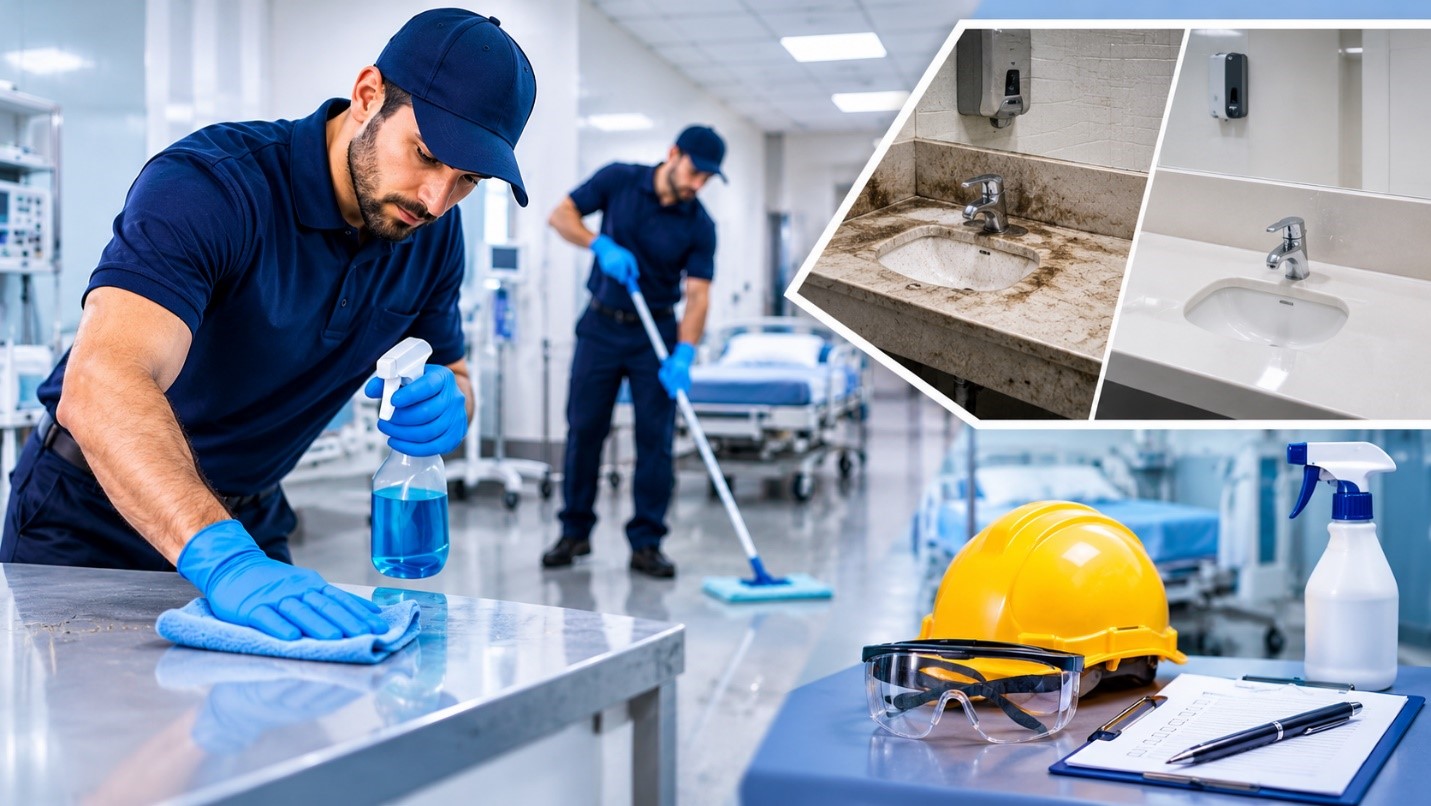
Healthcare facility cleaning involves more than keeping floors, surfaces, and waiting areas spotless. Medical offices, dental practices, and outpatient clinics must follow specific cleaning and disinfection protocols to protect patients and staff.
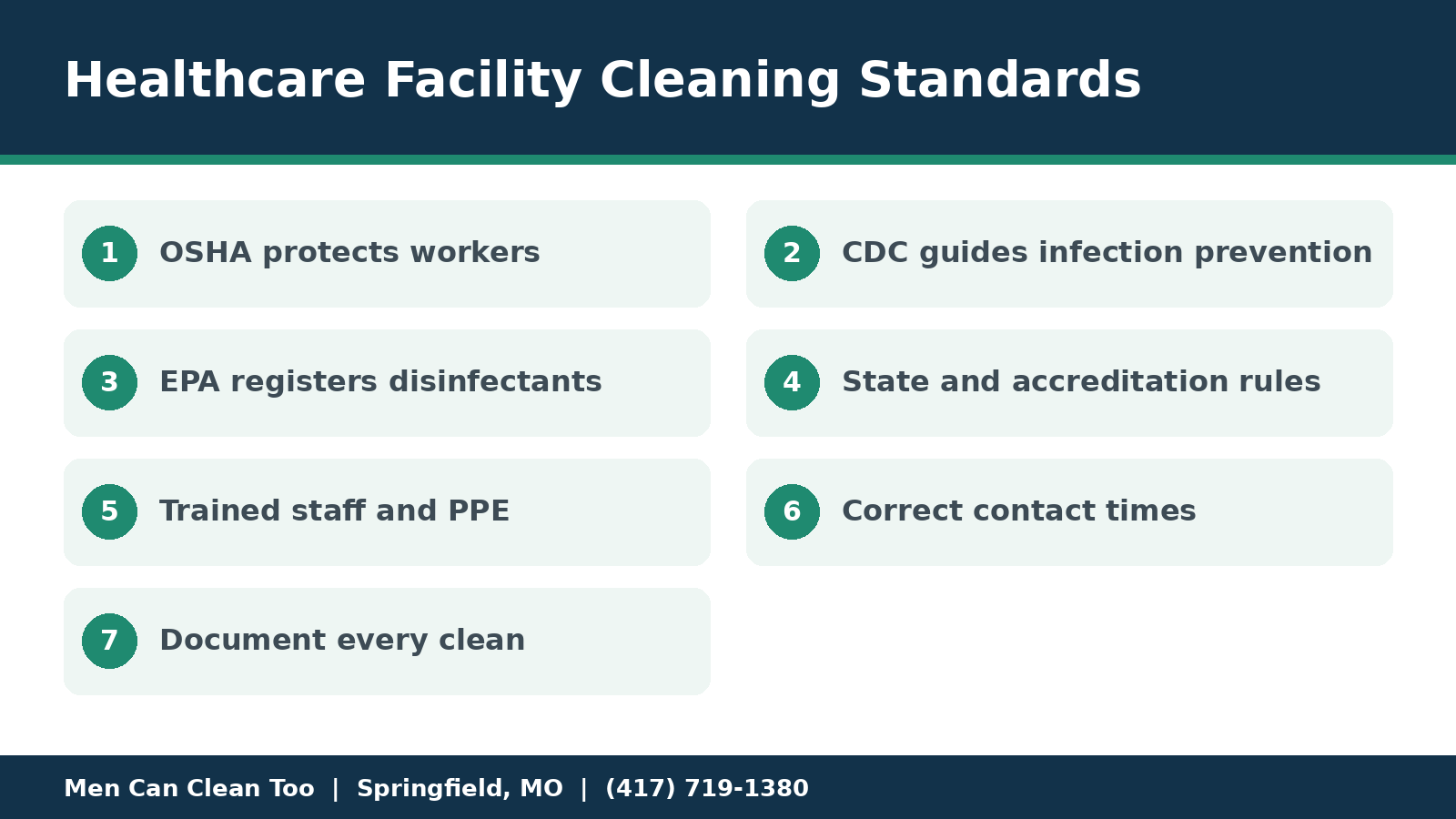
Healthcare facility cleaning standards are shaped by OSHA worker safety requirements, CDC infection prevention guidelines, EPA disinfectant regulations, and applicable state and accreditation rules.
These standards address areas such as staff training and personal protective equipment (PPE) to disinfectant contact times and cleaning documentation.
Whether you manage a small medical practice or a busy outpatient facility, this guide explains what your cleaning vendor must follow, how to check compliance, and what to look for when choosing a healthcare cleaning provider.
What Are Healthcare Facility Cleaning Standards?
Healthcare facility cleaning standards are the rules and guidelines that govern how medical spaces are cleaned and disinfected.
They come mainly from OSHA for worker safety, the CDC for infection prevention practices, the EPA for disinfectant registration, and state and accreditation bodies. Together, they cover training, PPE, products, contact times, and documentation.
Who Sets the Standards?
Several agencies shape medical facility cleaning requirements. Each covers a different piece. Several agencies shape healthcare facility cleaning standards.
OSHA
OSHA cleaning requirements in healthcare focus on protecting workers. Under the Bloodborne Pathogens standard, employers must take steps to safeguard employees who could come into contact with blood or other potentially infectious materials. That can include cleaning staff.
The Hazard Communication Standard also requires chemical labels, Safety Data Sheets, and training on the products used. Chemical training is a key piece of healthcare facility cleaning standards. Worker safety rules are part of healthcare facility cleaning standards.
These are the OSHA cleaning requirements healthcare workers rely on.
CDC
CDC environmental cleaning guidelines describe how healthcare spaces should be cleaned and disinfected, including focusing on high-touch surfaces, cleaning before disinfecting, and following product instructions.
The CDC's environmental infection control guidelines are a core reference for infection prevention cleaning. CDC guidance is a core source for healthcare facility cleaning standards.
EPA
The EPA registers disinfectants and approves their labels. Using a product exactly as labeled, including dilution and contact time, is a legal requirement, not just a suggestion. Label use is a legal part of healthcare facility cleaning standards.
State and Accreditation
Missouri licensing rules and accreditation surveys can add requirements depending on your facility type. Your practice's compliance lead should confirm what applies to you. State rules can add to healthcare facility cleaning standards.
Compliance leads should confirm which healthcare facility cleaning standards apply. Ask your accreditor about clinic cleaning regulations that apply to you.
What Are the Core Requirements for Cleaning Vendors?
A cleaning vendor working in a healthcare space should be able to show:
- A written cleaning scope matched to your facility, with tasks and frequencies.
- Training records for every cleaner assigned to your site.
- Use of EPA-registered disinfectants suited to the setting.
- Knowledge of contact times and correct dilution.
- PPE provided and used as needed.
- Safety Data Sheets for all products on site.
- A process for documenting completed cleaning.
- Clear boundaries on what they do and don't handle, like regulated medical waste.
- Insurance and background checks.
Training and PPE
Training is the backbone of medical cleaning compliance.
Training Should Cover
- Bloodborne pathogen awareness and exposure response, where applicable.
- Chemical safety, labels, and Safety Data Sheets.
- Proper cleaning order, like clean to dirty and top to bottom.
- Disinfectant use, including contact time.
- Preventing cross-contamination with color-coded cloths or tools.
- Hand hygiene and glove use.
- What to do if they find sharps or spills.
PPE Commonly Used
Facility policy and product labels decide what's required. Your vendor should follow both.
Disinfectants and Contact Times
Disinfectant use is where many cleaning programs fall short. Our guide to cleaning vs. sanitizing vs. disinfecting explains the basics.
- Use EPA-registered products appropriate for healthcare surfaces. The EPA maintains lists of registered disinfectants.
- Clean before disinfecting. Dirt reduces product performance.
- Respect contact time. The surface must stay wet for the full time on the label.
- Dilute correctly. Too weak won't work, and too strong can damage surfaces or harm people.
- Check surface compatibility. Some products damage medical equipment. Follow the equipment manufacturer's instructions. Equipment compatibility matters under healthcare facility cleaning standards.
- Never mix products. Never mix bleach with ammonia or acids.
- Test first. Test new products in an inconspicuous spot on unfamiliar surfaces.
Documentation and Audit Trails
If it isn't documented, inspectors may assume it didn't happen. Good documentation includes:
- Cleaning logs for each visit, signed or initialed.
- Checklists for restrooms, exam rooms, and common areas.
- Training records for every assigned cleaner.
- Product lists with Safety Data Sheets.
- Incident reports for spills, exposures, or damage.
- Records of periodic deep cleaning and floor care.
We recommend a monthly review of logs between the practice manager and the cleaning vendor.
Cleaning vs. Medical Waste: Who Handles What?
This is one of the most important boundaries to set in writing. Clear roles are part of infection prevention cleaning.
Most janitorial vendors don't transport regulated medical waste. That's handled by licensed haulers. Make sure your contract says so clearly. Waste handling is outside the scope of healthcare facility cleaning standards for cleaners.
What Questions Should You Ask Your Cleaning Vendor?
- What healthcare facilities do you currently clean?
- How do you train staff on bloodborne pathogens and chemical safety?
- Which disinfectants do you use, and are they EPA-registered?
- How do you make sure contact times are met?
- How do you prevent cross-contamination between rooms?
- What documentation do you provide after each visit?
- How do you handle sharps or spills found during cleaning?
- Are your cleaners background-checked and insured?
- Will the same team clean our facility every time?
- How quickly do you fix issues we report?
For more vetting questions, see our list of questions to ask a commercial cleaning company. Vetting questions help confirm a vendor understands healthcare facility cleaning standards.
Healthcare Cleaning Compliance Checklist
Use this as a quick audit of your current program. Our medical office cleaning service is built around these items.
- [ ] Written scope with tasks and frequencies by room.
- [ ] Training records on file for all cleaners.
- [ ] EPA-registered disinfectants used as labeled.
- [ ] Contact times followed and verified.
- [ ] PPE available and used.
- [ ] Safety Data Sheets on site.
- [ ] Color-coded cloths or tools to prevent cross-contamination.
- [ ] Daily cleaning logs signed.
- [ ] Clear medical waste boundaries in the contract.
- [ ] Monthly review with vendor.
- [ ] Certificate of insurance on file.
For room-by-room daily tasks, our medical office cleaning checklist goes into detail.
How Do Standards Differ by Facility Type?
Not every healthcare space carries the same risk or rules. A hospital with surgical suites follows far stricter protocols than a small chiropractic office. Here's a general view. Facility type shapes which healthcare facility cleaning standards apply.
Facilities with surgical or procedural areas often need specialized healthcare environmental services. Make sure any vendor's scope matches your facility's risk level. Risk level should match the healthcare facility cleaning standards your vendor follows.
What Are Common Compliance Gaps in Clinic Cleaning?
When we walk a medical office for the first time, the same gaps show up again and again. None of them are dramatic, but each one can cause trouble during an inspection.
Wiping too fast. Disinfectant is sprayed and wiped off within seconds, so the labeled contact time is never met.
One cloth for everything. The same cloth moves from the restroom to the reception desk, spreading germs instead of removing them.
Missing records. Cleaning happens, but nothing is written down, so there's no proof for surveyors.
Outdated Safety Data Sheets. Products have changed, but the binder hasn't.
Unclear roles. Front desk staff assume the cleaners handle between-patient wipe-downs, and the cleaners assume staff does.
Forgotten surfaces. Waiting room chair arms, check-in pens, clipboards, and light switches in exam rooms often get skipped.
Fixing these usually doesn't cost much. It takes a written scope, color-coded tools, a simple log, and a monthly check-in between the practice manager and the vendor.
How Do You Switch Cleaning Vendors Without a Gap?
Changing vendors in a healthcare setting needs a little planning. Give your current vendor notice according to your contract, and schedule the new team's walkthrough before the old one leaves. Share your infection control policies, product preferences, and any surveyor feedback.
Ask the new vendor to provide training records and a written scope before the first night. Then plan a closer review during the first two weeks to catch anything missed. This approach keeps your healthcare facility cleaning standards steady through the change.
Budget with our janitorial service cost guide, and see our commercial cleaning tips.
Frequently Asked Questions
What Are OSHA Cleaning Requirements in Healthcare?
OSHA requirements focus on protecting workers. They include the Bloodborne Pathogens standard for anyone who may be exposed to blood or infectious materials, and the Hazard Communication standard for chemical labels, Safety Data Sheets, and training. Employers must provide PPE and training where these apply. OSHA cleaning requirements healthcare vendors follow also support medical cleaning compliance.
What Do CDC Environmental Cleaning Guidelines Recommend?
The CDC recommends cleaning surfaces before disinfecting, focusing on high-touch surfaces, using EPA-registered disinfectants as labeled, and following a consistent cleaning process. Its guidelines for environmental infection control in healthcare facilities are a common reference for clinics and their cleaning vendors. This is the heart of infection prevention cleaning.
Do Cleaning Vendors Need Bloodborne Pathogen Training?
If cleaners may be exposed to blood or other potentially infectious materials, OSHA requires appropriate training and protections. In medical settings, that's often the case. Ask your vendor for training records, and confirm the specifics with your compliance lead.
Who Handles Medical Waste in a Clinic?
Regulated medical waste, such as red bag waste and sharps, is typically managed by clinical staff and picked up by a licensed medical waste hauler. General trash and recycling are handled by the cleaning vendor. Spell out these responsibilities in writing in your cleaning contract. Clinic cleaning regulations usually keep it separate from janitorial work.
How Often Should a Medical Office Be Cleaned?
Most medical offices need daily cleaning, with exam rooms and high-touch surfaces wiped by staff between patients and thoroughly cleaned by the cleaning team every night. Restrooms and waiting areas need daily attention, and deeper tasks like floor care happen weekly or monthly. Medical facility cleaning requirements may call for more in procedure rooms.
Build a Cleaning Program You Can Stand Behind
Healthcare facility cleaning standards come from several sources, but they share a common goal: safe spaces for patients and staff. The right vendor makes that easier with trained teams, the right products, and documentation you can show an inspector.
We'll walk your clinic, map tasks room by room, and set clear boundaries on what we handle. Call or text (417) 719-1380 to discuss a medical cleaning plan for your Springfield-area practice.