
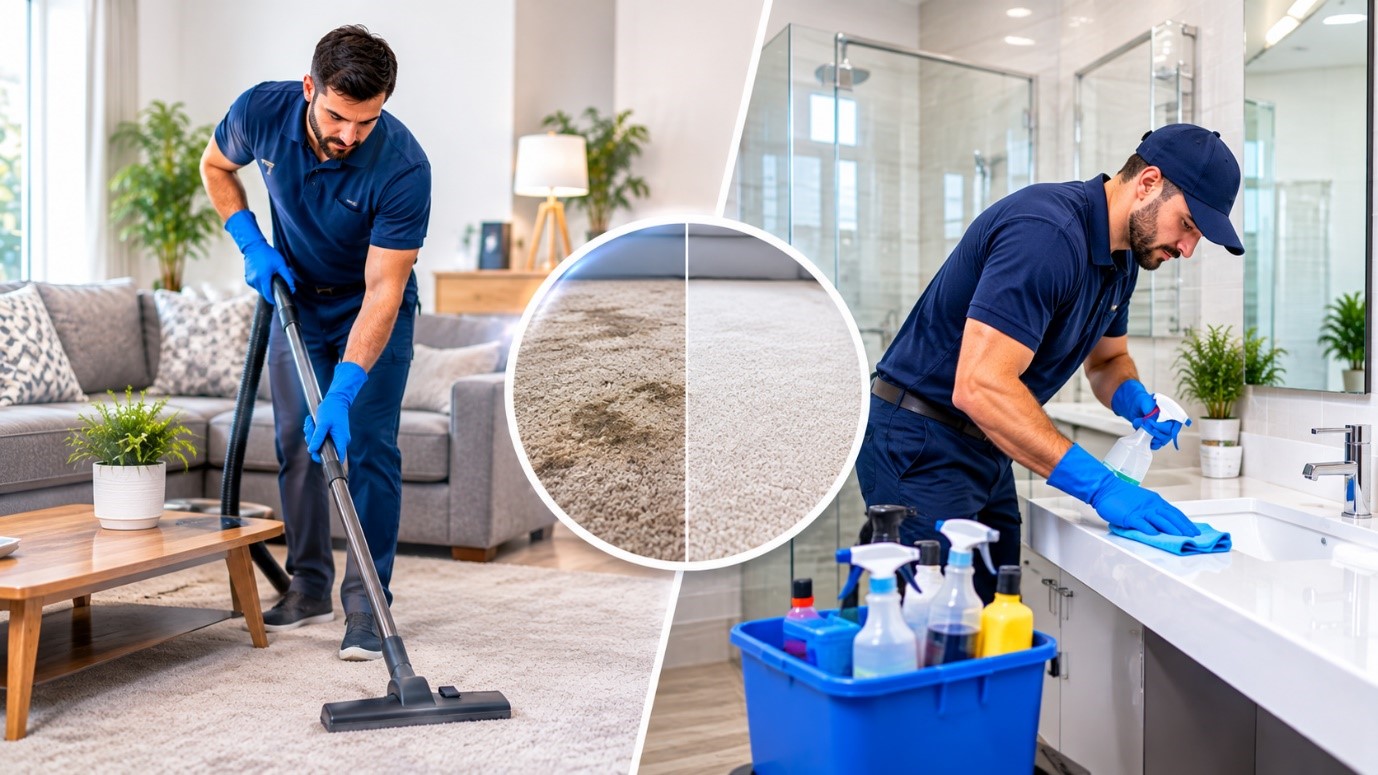
Deep cleaning vs. regular cleaning comes down to depth and frequency. Regular cleaning maintains surface cleanliness through dusting, vacuuming, mopping, and wiping, while deep cleaning removes built-up grime in hidden and hard-to-reach areas such as baseboards, behind appliances, grout, and inside fixtures. Deep cleans take longer and cost more.
That short answer still leaves most people guessing. Your home can look clean and still hold weeks of buildup in places a normal visit never reaches.
This guide shows you the exact line between the two, how to tell which one you need today, and how to plan both so you pay for each only when it earns its price.
We clean homes and offices across Springfield and the Ozarks, so we see this gap in almost every first walkthrough.
Deep Cleaning vs. Regular Cleaning at a Glance
Use this table to see where each service starts and stops.
What Regular Cleaning Covers and Where It Stops
Regular cleaning is maintenance cleaning. A standard visit keeps the daily surfaces under control, which is why it works best on a home that is already in good shape.
A typical regular visit covers:
- Dusting reachable surfaces.
- Vacuuming and mopping floors.
- Wiping kitchen counters and the outside of appliances.
- Cleaning sinks, toilets, tubs, and showers.
- Emptying trash and tidying open areas.
When you weigh deep cleaning vs. regular cleaning for a home that is already in good shape, regular visits win on cost. Here is where they stop. A standard visit does not usually reach the oven interior, the track of a sliding door, or the top of a bookshelf.
These spots collect slowly, so the problem stays invisible until the day you move a couch. If you want that routine handled for you, our house cleaning service builds a recurring plan around your schedule.
Standard cleaning vs. deep cleaning is not a quality gap. Regular visits are done well, but they are designed to maintain, not restore.
What Deep Cleaning Covers That Regular Visits Skip
Deep cleaning vs. regular cleaning is easiest to see in a kitchen and a bathroom. Many people ask what is included in a deep clean, and the answer is the detail work. A deep clean goes after the spots where dust, grease, and minerals pile up over months.
In the kitchen
- Inside the oven and microwave.
- Inside the refrigerator, shelves, and drawers.
- Cabinet fronts and handles, where grease builds up.
- Range hood and filter.
In the bathrooms
- Grout lines and tile scrubbed, not just wiped.
- Limescale on faucets, showerheads, and glass.
- Soap scum along tubs and shower doors.
- Vent fan covers.
Through the rest of the home
- Baseboards and door frames.
- Ceiling fans and light fixtures.
- Window sills and tracks.
- Dust buildup behind furniture and along walls.
Our deep cleaning checklist lays out the full room-by-room version if you want to plan your own pass or compare it to a quote.
Surface vs. Detail Cleaning, Measured in Labor Hours
Deep cleaning and regular cleaning differ in more than just the products used. It is time. Surface cleaning covers a lot of ground quickly. Detail cleaning means scrubbing a small area thoroughly, then moving to the next one, and that adds up in labor hours.
That is why the cost gap exists. A home that takes three hours to maintain might need five or six for a first deep clean, and each added hour is time someone spends on baseboards, grout, and appliance interiors. At our hourly rate, each added hour costs $45.
Most cleans use the flat rate shown on our website. Hourly cleaning is $45/hr. Flat rates come from your bedrooms, bathrooms, and square footage, so you see the price before you book.
If you want a deeper breakdown of how homes of different sizes are priced, our house cleaning cost guide walks through it.
When you compare deep clean vs. standard clean cost, keep three things in mind:
- Condition. A neglected home takes more labor hours than a maintained one.
- Size. More bathrooms and square footage add detail work.
- Scope. Add-ons like inside windows or interior appliances change the total.
Understanding deep cleaning vs. regular cleaning at the labor-hour level also stops you from comparing the wrong quotes.
Seven Signs It Is Time for a Deep Clean
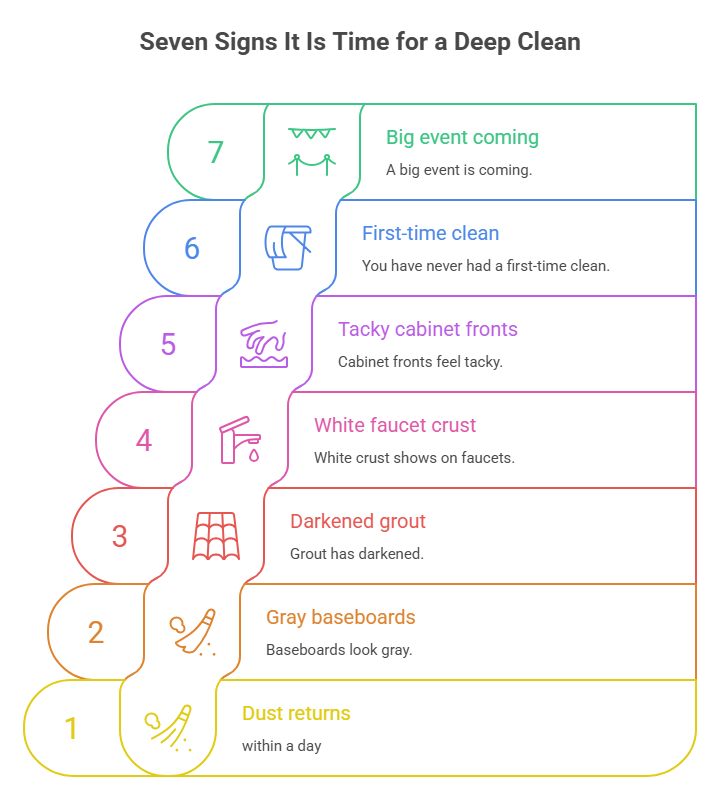
The clearest answer to deep cleaning vs. regular cleaning is what your space is already telling you. It gives clues long before it looks dirty. Watch for these.
- Dust returns within a day. Hidden buildup keeps releasing into the air.
- Baseboards look gray. They hold weeks of dust that a quick wipe skips.
- Grout has darkened. Surface wiping stopped working months ago.
- White crust shows on faucets. That is limescale, and it needs more than a damp cloth.
- Cabinet fronts feel tacky. Cooking grease has settled and hardened.
- You have never had a first-time clean. A new home, a new routine, or a long gap since the last thorough clean all qualify.
- A big event is coming. That could be spring cleaning, a holiday, a new baby, guests, or a move.
If the seventh sign is a move, you might need a different checklist. Our move-out cleaning checklist covers what landlords inspect and how that differs from a standard deep clean.
Scheduling Each Service Without Overpaying
Deep cleaning vs. regular cleaning runs on two different calendars. The right schedule for each depends on who uses the space and how hard it works.
For Your Home
Regular cleaning fits a weekly, every-other-week, or monthly rhythm, depending on household size, pets, and how much time you spend at home. Deep cleaning follows a slower rhythm.
- Annual deep clean. A good fit for a quiet household that keeps up with daily tidying.
- Bi-annual deep clean. Twice a year is the most common pattern for families, pet owners, and busy homes, timed to spring cleaning and the fall before the holidays.
- One-time reset. Useful before you start recurring service or after a long gap.
We offer all of these. If you are asking how often to deep clean your house, start with how many people live there and how long it has been since the last thorough clean.
For Your Office
Offices need frequent regular cleaning because shared restrooms, breakrooms, and floors get used all day. Deep cleans fit seasonally, or after busy periods, renovations, or a change of cleaning vendor.
Foot traffic sets the schedule, so a quiet office with a few staff needs less than a busy front desk. If you just switched cleaning vendors, a deep clean gives the new team a clean baseline to maintain, so you can tell right away whether the standard is holding.
If you run a small office, you can also hand off the rest of the facility list. Our Business Services Coordinator arranges vendors for windows, pressure washing, floor care, and other building needs beyond routine cleaning, so you make one call.
Is a Deep Clean Worth the Cost?
For most spaces, yes, and the math is easier than it looks.
- Your time has a price. A full deep clean can take you a weekend, and that weekend has value.
- Buildup damages surfaces. Limescale, grease, and soap scum are easier to remove early and harder once they set.
- It shortens future visits. A reset makes every recurring visit faster and more consistent.
Spring cleaning is the classic trigger, but any season works. The honest limit is this: if your home is already maintained and nothing on the signs list applies, a deep clean once a year may be plenty. Do not pay for detail work you cannot see.
Your long-term spend changes too. A reset costs more up front, but it keeps recurring visits on maintenance and away from catch-up work. Quotes vary a lot, so compare scope, not just price. Our guide on how to hire a cleaning company lists the questions to ask before you commit.
How to Combine Both for the Best Value
Treat deep cleaning vs. regular cleaning as a system, not a choice. The best pattern is a reset followed by maintenance. Start with a deep clean, then put regular visits on the calendar so you never rebuild the buildup.
- Book a deep clean first. It clears the backlog.
- Set a recurring schedule. Weekly, every other week, or monthly keeps the surfaces maintained.
- Add a yearly or twice-a-year deep clean. This catches the slow-building spots.
- Handle small details between visits. A quick wipe of baseboards or a monthly grout scrub extends the clean.
Our house cleaning tips cover quick between-visit habits that make the gap between professional cleans easier to stretch.
If you are not sure which fit you need, we back our residential cleans with the Rate Your Clean Guarantee. Score the clean 8 to 10, and you pay in full. A 6 or 7 saves you 25%, and a 5 or below is free. Our 4.8★ Google rating shows how that promise plays out.
Which One Should You Book Today
Run through this quick guide on deep cleaning vs. regular cleaning before you decide.
- Your home is maintained, and nothing on the signs list applies. Book regular cleaning.
- You see grime in grout, baseboards, or appliances. Book a deep clean first.
- You are starting service with a new company. Ask about a first-time clean so the baseline is set.
- You run a small office after a vendor change. A deep clean resets the space, then recurring visits take over.
- Your calendar has a big event. Schedule the deep clean two to three weeks ahead so you have a buffer.
FAQs
Do I need a deep clean before starting regular cleaning?
It helps. A first deep clean resets the home so recurring visits stay short and consistent. Knowing the difference between deep cleaning and regular cleaning can help you decide whether your home needs one first.
How long does a deep clean take compared to a regular clean?
A deep clean takes longer because it covers detailed areas, such as grout, baseboards, and appliance interiors. The time depends on home size and condition, as well as what is included in a deep clean.
Does regular cleaning ever include baseboards or inside appliances?
Usually not. Standard cleaning vs. deep cleaning comes down to the level of detail. Standard visits focus on surfaces and floors, while baseboards and appliance interiors are deep cleaning tasks, though some can be added as extras.
Is a deep clean worth it if my home already looks clean?
Maybe. If you see no signs of buildup, you can skip it for now. Gray baseboards, dark grout, or returning dust may indicate it's time. Compare the deep clean vs. standard clean cost before deciding.
How frequently should I deep clean my house?
Knowing how often to deep clean a house depends on your household's needs. Most homes do well with one to two deep cleans a year. Busy households, pet owners, and families with kids may prefer twice a year.
Choose the Clean That Fits Your Space
Deep cleaning vs. regular cleaning is not a contest. Each one does a different job, and the right mix keeps your home or office clean without overpaying. A deep clean resets the buildup, and regular visits protect it.
If you are ready to reset, we can help. Book a deep clean with Men Can Clean Too, check your price online, and rate the finished clean.