
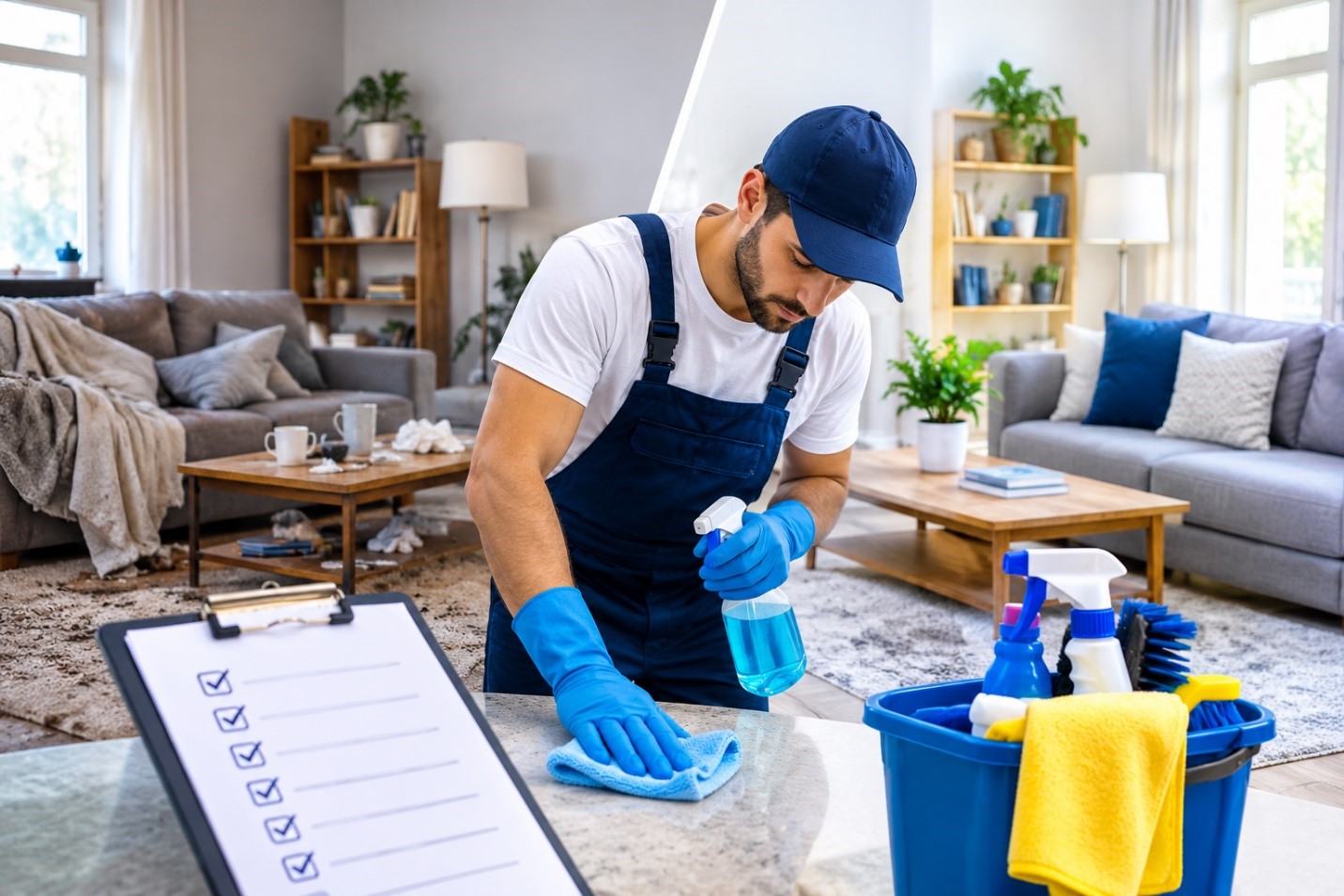
A deep clean goes beyond the regular dusting, vacuuming, and mopping you do each week. It tackles the dirt, grease, and dust that build up in overlooked areas, from kitchen appliances and bathroom grout to ceiling fans, baseboards, and spaces behind furniture.
A deep cleaning checklist is a room-by-room guide to cleaning these hard-to-reach areas and giving your entire home a more thorough clean.
Whether you're planning a seasonal refresh, preparing for guests, or catching up on neglected chores, this guide covers the supplies you need, the right order of tasks, and what to clean in every room.
We'll also explain how long a deep clean takes, how often to do one, and when professional help makes sense.
What Is a Deep Cleaning Checklist?
A deep cleaning checklist is a room-by-room list of detailed tasks that go beyond regular cleaning. It covers baseboards, grout, inside appliances, vents, ceiling fans, cabinet fronts, light fixtures, and areas behind and under furniture.
Most homes take advantage of a deep clean once or twice a year, or more often with pets or allergies.
Before You Start: Supplies and Order of Work
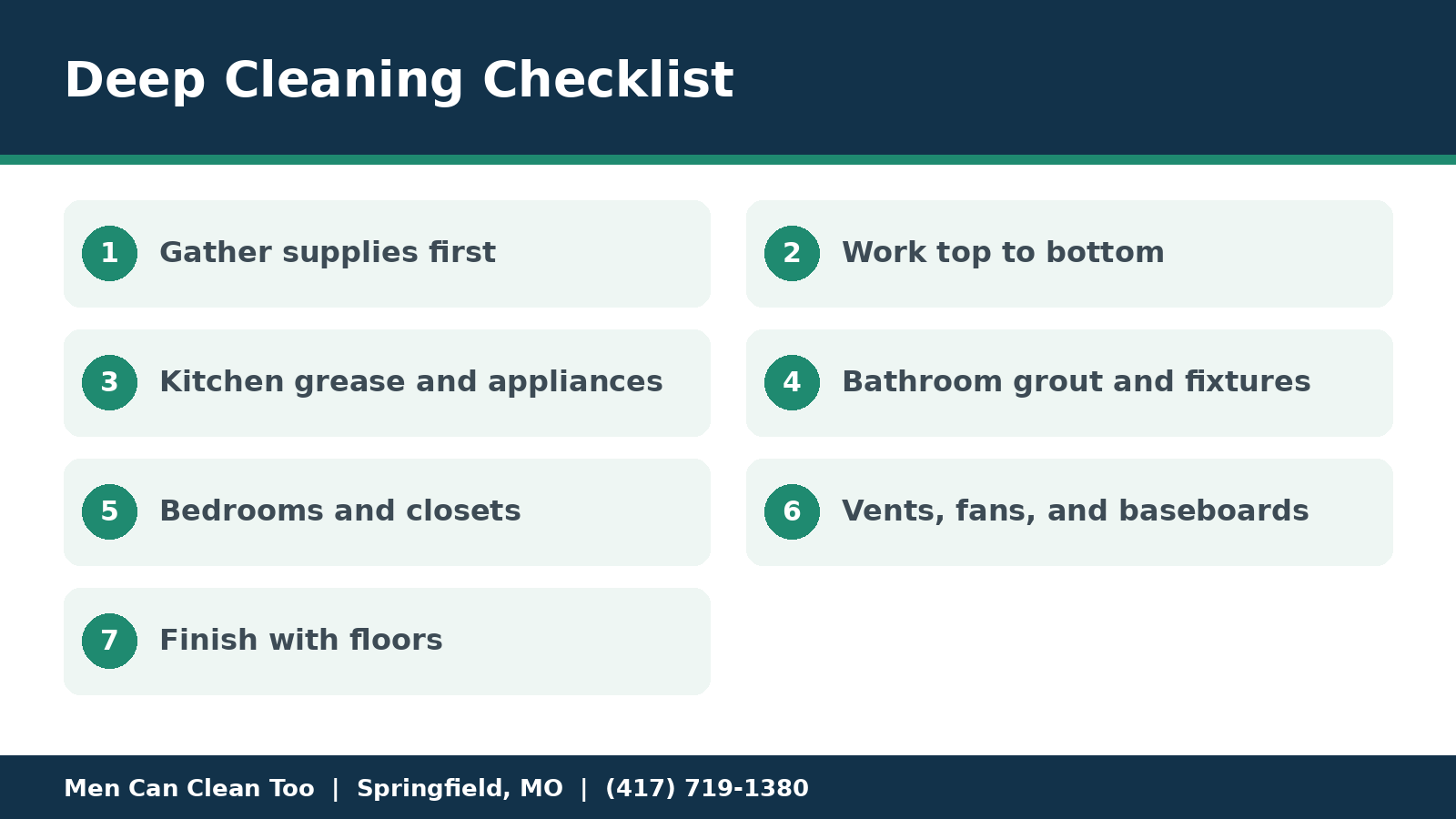
Gather everything before you begin so you're not running back and forth. Gathering supplies first keeps a deep cleaning checklist moving. Print this list as your deep clean checklist printable copy.
Supplies
- Microfiber cloths, plenty of them.
- All-purpose cleaner.
- Glass cleaner.
- Degreaser for the kitchen.
- Bathroom cleaner suited to your surfaces.
- Scrub brushes and a grout brush.
- Vacuum with attachments.
- Mop and bucket.
- Extension duster for high areas.
- Step stool.
- Gloves.
Order of Work
- Declutter first. You can't deep clean around piles.
- Top to bottom. Dust ceilings, fans, and vents before counters and floors.
- Dry before wet. Dust and vacuum before wiping and mopping. Dry before wet is a core rule of any cleaning checklist.
- Back to front. Work toward the door so you don't walk over clean floors.
- Let products sit. Apply cleaners to tough spots and move on while they work. Letting products sit saves time on a deep cleaning checklist.
Safety First: Never mix bleach with ammonia or acids. Test products in an inconspicuous spot before using them on a surface, and follow the manufacturer's instructions for every cleaner and appliance.
Kitchen Deep Clean
The kitchen takes the longest because grease builds up everywhere. It's the biggest section of any house deep cleaning checklist.
Appliances
- Clean inside the oven and wipe the door glass.
- Clean the stovetop, burner grates, and drip pans.
- Degrease the range hood and wash or replace the filter.
- Empty and clean inside the refrigerator, including shelves and drawers.
- Wipe the top of the fridge and pull it out to clean behind and under it if safe to do so.
- Clean inside the microwave.
- Run a dishwasher cleaning cycle and clean the filter and door seal.
Surfaces and Cabinets
- Wipe cabinet fronts, handles, and tops.
- Clean inside cabinets and drawers after emptying them.
- Clean the backsplash and grout.
- Scrub the sink and polish the faucet.
- Wipe light fixtures and switch plates.
- Clean small appliances like the toaster and coffee maker.
Floors
- Move chairs and small furniture.
- Vacuum corners and under cabinets.
- Mop thoroughly, including under the edges of appliances.
Bathroom Deep Clean
Bathrooms need careful attention to soap scum, mildew, and grout.
- Scrub shower walls, tub, and glass doors to remove soap scum.
- Clean grout lines with a grout brush.
- Descale showerheads and faucets.
- Wash or replace the shower curtain and liner.
- Clean the toilet thoroughly, including the base, behind it, and the hinges.
- Wipe inside the vanity and medicine cabinet.
- Clean the exhaust fan cover.
- Wipe baseboards, doors, and door frames.
- Clean mirrors and light fixtures.
- Mop the floor, including corners and behind the toilet.
If you see mold growth beyond small surface spots, the EPA's mold guidance explains when it's safe to clean yourself and when to call a specialist. Mold safety belongs on any deep cleaning checklist. These rules make the rest of your deep cleaning checklist faster.
Bedroom Deep Clean
Bedrooms collect dust, especially under beds and in closets.
- Wash all bedding, including mattress pads, pillows, and duvets if washable.
- Vacuum the mattress and flip or rotate it if recommended.
- Vacuum under the bed and behind furniture.
- Dust headboards, nightstands, dressers, and lamps.
- Wipe closet shelves and vacuum the closet floor.
- Clean mirrors and windowsills.
- Wipe light switches and door handles.
- Dust blinds and wash curtains if needed.
Living Room and Dining Area
These rooms get daily use and hide lots of dust. Living areas need careful dusting on a deep cleaning checklist.
- Vacuum upholstered furniture, including under cushions.
- Dust shelves, decor, picture frames, and electronics (per manufacturer)
- Wipe remote controls and light switches.
- Clean the TV screen with a product suited to screens.
- Dust and wipe baseboards.
- Wipe dining chairs and table legs.
- Clean light fixtures and lampshades.
- Move furniture to vacuum underneath.
- Clean glass tables and mirrors.
Entry, Stairs, and Hallways
These pass-through spaces take a lot of traffic. Moving out instead? Use our move-out cleaning checklist.
- Wipe the front door, handle, and frame.
- Clean the entry tile or wash the entry mat.
- Dust railings and banisters.
- Vacuum stairs, edges, and corners carefully.
- Wipe baseboards along the hallway.
- Spot-clean scuffs on walls.
- Organize and wipe coat closet shelves.
Laundry Room and Home Office
These rooms are easy to forget, but they collect plenty of dust and lint.
Laundry Room
- Clean the washing machine drum, door seal, and detergent drawer.
- Run a washer cleaning cycle per the manufacturer's instructions.
- Clean the lint trap and the housing around it.
- Wipe the tops and sides of the washer and dryer.
- Pull machines out carefully to sweep behind them if safe to do so.
- Wipe shelves and organize supplies.
Home Office
- Dust the desk, shelves, and monitor (with a screen-safe cloth)
- Wipe the keyboard, mouse, and phone per manufacturer guidance.
- Vacuum under the desk and chair.
- Wipe the chair base and arms.
- Untangle and dust cords and power strips.
How Do You Deep Clean a Home With Pets?
Pets add hair, dander, and the occasional accident, so your deep cleaning checklist needs a few extra steps.
- Vacuum upholstery and carpets slowly, in multiple directions, to lift embedded hair.
- Wash pet beds, blankets, and washable toys.
- Wipe food and water bowl areas and the floor around them.
- Clean nose prints from glass doors and windows.
- Wipe baseboards and lower walls where pets rub.
- Use enzyme cleaners on pet stains, tested in an inconspicuous spot first.
- Replace HVAC filters more often if pets shed heavily.
Pet-friendly products matter too. Ventilate well, keep pets out of rooms while products dry, and store cleaners where curious noses can't reach.
The EPA's Safer Choice program can help you find products with safer ingredients. Safer products fit well with any deep cleaning checklist. Order of work is central to any deep cleaning checklist.
Kids' Rooms and Play Areas
Kids' spaces need a gentle but thorough approach.
- Sort and wash plush toys per label instructions.
- Wipe hard toys and sanitize ones that go in mouths.
- Dust shelves, bookcases, and window sills.
- Vacuum under beds where toys and crumbs hide.
- Spot-clean crayon or marker on walls, testing first.
- Wipe light switches, door handles, and dresser knobs.
Whole-House Tasks
Some tasks span every room. Do them in one sweep so nothing gets missed. Whole-home tasks open every deep cleaning checklist. Renters and landlords can compare our apartment turnover cleaning checklist.
How Long Does a Deep Clean Take?
Time depends on your home's size, condition, and how many people are working.
A typical home may take a team four to eight hours, longer for large or heavily soiled homes. Splitting the work over a weekend is a realistic DIY plan. A weekend split makes a DIY deep cleaning checklist realistic. Experience teaches that rushing never works with a deep cleaning checklist.
Is DIY or Professional Deep Cleaning Better?
Both work. The right choice depends on your time, energy, and goals. Our guide to house cleaning costs helps you budget.
If you'd rather hand it off, our house cleaning service includes deep cleans backed by our Rate Your Clean Guarantee. Not sure whether you need a deep clean or a standard one? Our guide to deep cleaning vs. regular cleaning explains the difference.
Knowing the difference helps you use a deep cleaning checklist at the right time. Most homes need a deep cleaning checklist once or twice a year.
What Is Included in a Professional Deep Clean?
What's included in deep cleaning can vary by company. Ours covers detailed kitchens and bathrooms, baseboards, door frames, light fixtures, ceiling fans, vents, cabinet fronts, and build-up throughout the home.
Add-ons like inside the oven and refrigerator are available, and recurring clients get them free on their 2nd and 4th visits. Free appliance cleaning is a nice bonus on a professional deep cleaning checklist.
If you're wondering what is included in deep cleaning with us, see our deep cleaning service.
You can see your flat-rate deep cleaning price online in under a minute.
How Do You Keep Your Home Clean After a Deep Clean?
A deep clean resets your home. Recurring cleaning keeps it there. After a deep clean, most homes stay in good shape with biweekly or weekly standard cleaning.
Our house cleaning tips also share small daily habits that keep build-up from coming back. Daily habits make your next deep cleaning checklist easier.
Spring Cleaning Checklist Additions
A spring cleaning checklist builds on the deep clean with seasonal tasks:
- Wash windows inside and out.
- Clean window screens.
- Wash curtains and drapes.
- Flip mattresses and rotate cushions.
- Clean out closets and donate unused items.
- Wipe patio furniture and clean entry areas.
- Check smoke detector batteries.
What Do People Miss on a Deep Clean?
Even a careful deep clean can skip these spots:
- Tops of door frames and cabinets.
- Under the refrigerator and stove.
- Inside light fixtures.
- Behind the toilet.
- Dryer vent and lint trap housing.
- Trash cans themselves.
- Washing machine seal and detergent drawer.
- Under sofa cushions.
How Can You Make a Deep Clean Less Overwhelming?
A whole house deep clean feels huge, so break it into pieces. Pick one room per day over a week, or tackle the kitchen and bathrooms one weekend and the rest the next. Set a timer for focused 45-minute blocks with short breaks. Play music or a podcast.
Recruit family members with clear assignments, like one person on baseboards and another on windows. Check tasks off as you go, since seeing progress keeps you moving. And remember, you don't have to finish everything in one go to make a real difference.
How Often Should You Use a Deep Cleaning Checklist?
Most homes need a full deep clean once or twice a year. You may need it more often if you have pets, young kids, allergies, or a busy household. It's also smart before or after a move, before hosting a big event, or after a long illness in the home.
Between full deep cleans, rotate one deeper task each week, like baseboards one week and the fridge the next.
Frequently Asked Questions
How Long Does a Deep Clean Take?
A typical home may take a professional team four to eight hours, depending on size and condition. Larger or heavily soiled homes take longer. Doing it yourself usually takes one to two full days, so many people split the work over a weekend or hire help. A whole house deep clean takes longer for large homes.
What Is Included in a Deep Clean?
A deep clean includes everything in a regular clean plus detail work. That means baseboards, door frames, vents, ceiling fans, light fixtures, cabinet fronts, grout, and build-up in kitchens and bathrooms. Inside the oven and refrigerator are often available as add-ons. That's what is included in deep cleaning at its core.
How Often Should I Deep Clean My House?
Once or twice a year at minimum. Homes with pets, children, allergies, or heavy use may benefit from a deep clean every three to six months. Regular weekly or biweekly cleaning in between keeps build-up low so each deep clean takes less time. Pair it with a spring cleaning checklist each year.
Should I Deep Clean Before Starting Recurring Cleaning?
Yes, in most cases. A deep clean gets your home to a clean baseline, so recurring visits can maintain it efficiently. Starting recurring service without a deep clean often means the first few visits take longer and still don't reach the detail areas. A deep cleaning checklist for home use helps you keep up afterward.
What Order Should I Deep Clean in?
Declutter first, then work top to bottom and dry to wet. Dust ceilings, fans, and vents before wiping counters, and clean floors last. Move room by room toward the door so you don't walk over clean areas. Let tough-spot cleaners sit while you work elsewhere. Follow a house deep cleaning checklist or a deep clean checklist printable to stay on track.
Hand Off the Hard Work
A deep clean is a big job, and you don't have to spend your weekend on it. Our trained team follows a written checklist room by room, from greasy range hoods to dusty baseboards.
You'll see your flat-rate price online before you book, and every deep clean is backed by our Rate Your Clean Guarantee. There are no contracts and no cancellation fees. Call or text (417) 719-1380, or book your deep clean online for your Springfield-area home.