
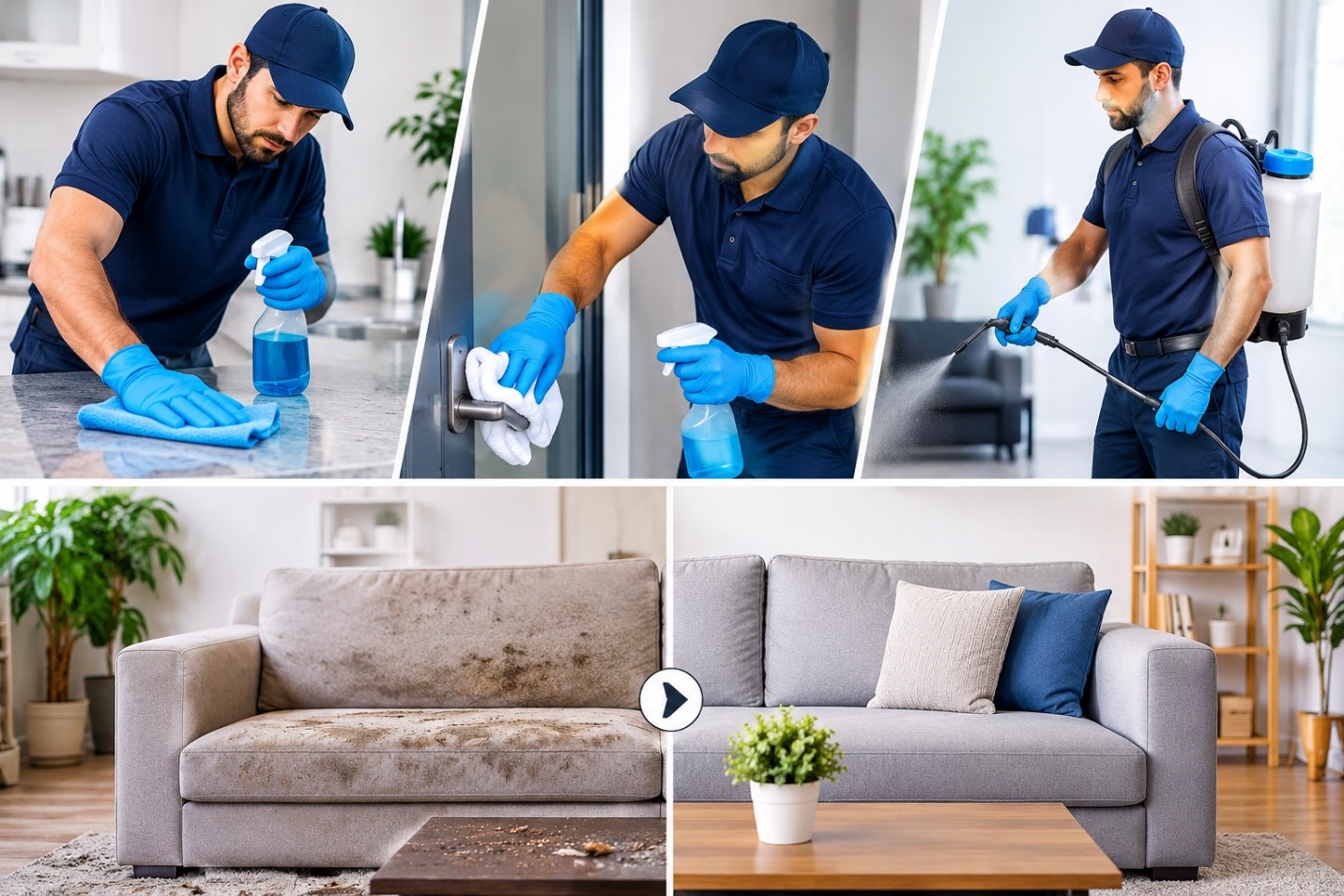
Cleaning, sanitizing, and disinfecting may sound like the same thing, but each process serves a different purpose. Cleaning removes dirt and some germs, sanitizing reduces germs to safer levels, and disinfecting uses chemical products to kill most germs on surfaces.
Knowing the difference between cleaning vs. sanitizing vs. disinfecting helps you choose the right products and methods for your home, office, kitchen, or workplace.
It also helps prevent common mistakes, such as disinfecting dirty surfaces or wiping away products before they've had enough contact time.
In this guide, we'll explain how each process works, when to use it, and how to follow a safe, effective cleaning routine.
Cleaning vs. Sanitizing vs. Disinfecting
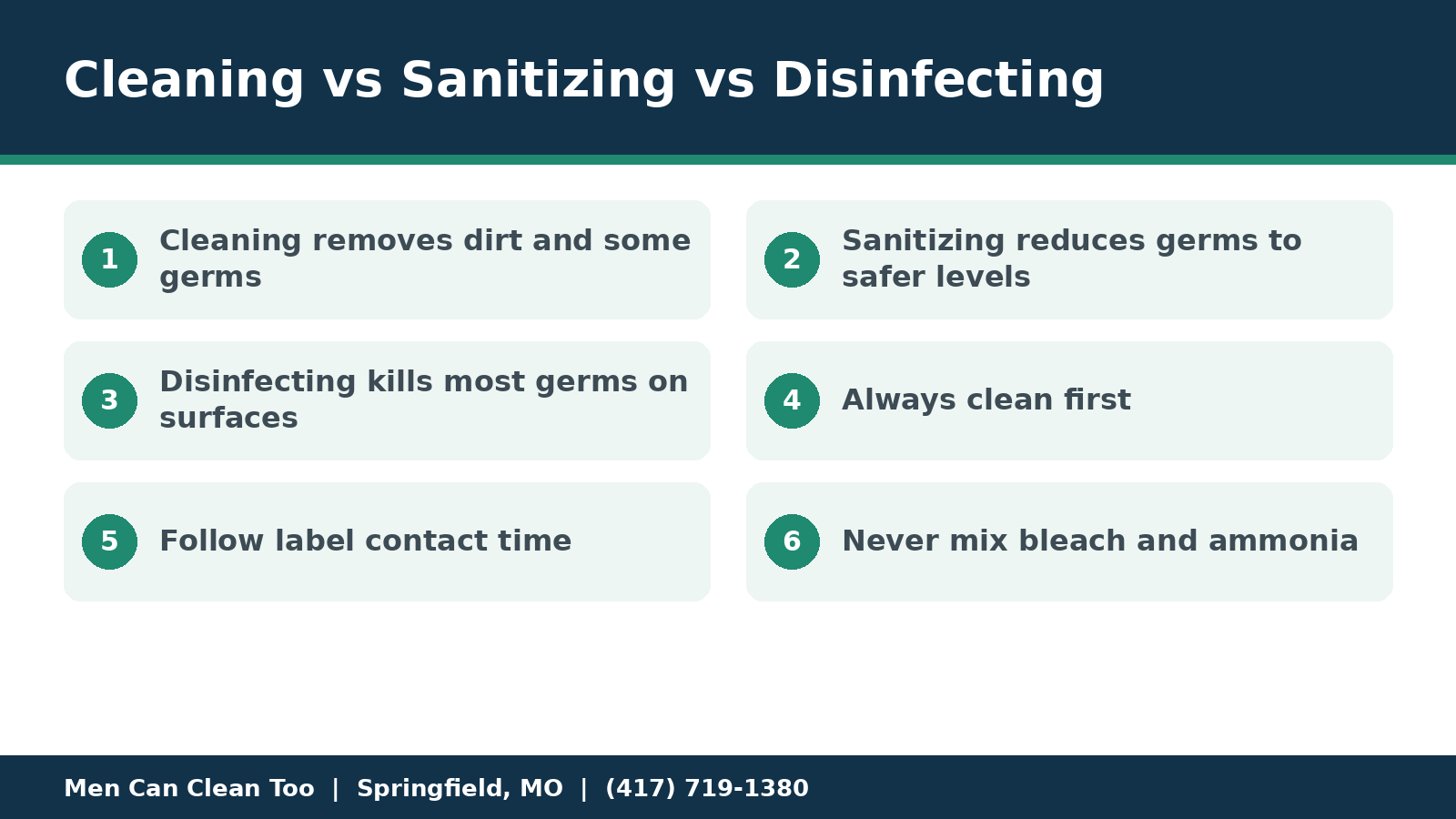
The difference between cleaning, sanitizing, and disinfecting comes down to what each removes or kills. Cleaning removes dirt, grime, and some germs with soap or detergent. Sanitizing lowers the number of germs to a safer level.
Disinfecting uses EPA-registered products to kill most germs on surfaces when left wet for the labeled contact time.
Quick Definitions
Cleaning: Physically removing dirt, dust, grease, and some germs from a surface using soap or detergent and water. It doesn't necessarily kill germs, but it removes many of them.
Sanitizing: Reducing germs on a surface to a level considered safe by public health standards. Common on food-contact surfaces.
Disinfecting: Using a chemical product to kill most germs on hard, non-porous surfaces. Disinfectants must be registered with the EPA and used exactly as labeled.
Comparison Table
How Does Cleaning Work?
Cleaning works through physical action. Soap or detergent breaks down oils and dirt, and wiping, scrubbing, or rinsing carries them away.
Along the way, it removes a large share of germs. Germ removal starts with cleaning, the first step in cleaning vs. sanitizing vs. disinfecting. That's the first difference between cleaning, sanitizing, and disinfecting.
Cleaning is the foundation of everything else. Dirt and grime can shield germs and reduce how well sanitizers and disinfectants work. That's why the CDC's guidance on cleaning and disinfecting facilities recommends cleaning first, then disinfecting when needed.
Order matters in cleaning vs. sanitizing vs. disinfecting: clean first, always. Disinfecting vs. cleaning isn't a choice, since you need both.
How Does Sanitizing Work?
Sanitizers reduce germs on a surface to a lower, safer level. They're often used where food is prepared or where children put things in their mouths. Food areas are where cleaning vs. sanitizing vs. disinfecting choices matter most for families.
Sanitizing is common for:
- Cutting boards and kitchen counters.
- Food prep surfaces.
- Dishes and utensils.
- Children's toys.
- Restaurant and breakroom tables.
Sanitizers usually have short contact times, but always check the label. Some food-contact sanitizers don't need rinsing, while others do. Label directions guide every step of cleaning vs. sanitizing vs. disinfecting.
How Does Disinfecting Work?
Disinfectants use chemicals to kill most germs on hard, non-porous surfaces. The key to disinfecting is contact time. Dwell time is the key difference in cleaning vs. sanitizing vs. disinfecting.
What Is Disinfectant Contact Time?
Contact time, sometimes called dwell time, is how long a surface must stay visibly wet with the disinfectant for it to work as labeled. It might be a minute, or it might be ten minutes. If you spray and wipe right away, the product may not have had time to kill the germs it's labeled for.
Contact time is the most misunderstood part of cleaning vs. sanitizing vs. disinfecting. Always follow the contact time disinfectant makers print on the label.
How to disinfect surfaces the right way:
- Clean the surface first to remove dirt.
- Apply the disinfectant per the label.
- Keep the surface wet for the full contact time.
- Reapply if it dries early.
- Rinse if the label says to, especially on food-contact surfaces.
- Let it air dry or wipe as directed.
The EPA keeps lists of registered disinfectants for specific germs, with contact times listed for each.
When Should You Use Each One?
At Home
For most homes, regular cleaning is enough most of the time. Disinfect toilets, faucet handles, and doorknobs when someone in the house is sick.
In Offices
Clean every surface regularly and disinfect high-touch areas like door handles, light switches, and shared equipment. Increase disinfection during flu season.
Seasonal illness is when cleaning vs. sanitizing vs. disinfecting matters most. Our office cleaning checklist and commercial cleaning tips build this into a routine.
In Kitchens
Clean, then sanitize food-contact surfaces. Disinfect sink handles and fridge handles regularly.
In Medical Offices
Clean and disinfect exam rooms and high-touch surfaces daily, using products matched to the setting. Our medical office cleaning checklist covers this in detail. Medical settings need a careful approach to cleaning vs. sanitizing vs. disinfecting.
See our healthcare facility cleaning standards guide.
Should You Sanitize or Disinfect?
"Sanitize vs. disinfect" is a common question. Choose sanitizing for food-contact surfaces and items like toys where a lower germ count is the goal and harsh chemicals aren't ideal.
Choose disinfecting for high-touch and high-risk surfaces like toilets, doorknobs, and medical areas, especially during illness. Risk level should guide your choice in cleaning vs. sanitizing vs. disinfecting.
What Are Common Mistakes?
- Skipping cleaning. Disinfectant sprayed on a dirty surface works less well.
- Wiping too soon. Not waiting for the full contact time.
- Mixing products. Never mix bleach with ammonia or acids. The combination creates toxic gases.
- Using disinfectant on everything. Overuse wastes products and can damage surfaces.
- Using the wrong product. Not every product is labeled for every germ or surface.
- Reusing dirty cloths. Spreads germs from one area to another.
- Poor ventilation. Strong products need fresh air.
How Do You Use Cleaning Products Safely?
Safety comes first with every product, especially disinfectants.
- Read the full label before use.
- Wear gloves and eye protection if the label recommends it.
- Never mix bleach with ammonia or acids.
- Test new products in an inconspicuous spot before using them on a surface.
- Follow the manufacturer's instructions for dilution, contact time, and rinsing.
- Ventilate the area while cleaning.
- Store products in their original containers, out of reach of children and pets.
In workplaces, OSHA's Hazard Communication standard requires that chemical labels and Safety Data Sheets be available for workers. Workplace chemical rules apply to cleaning, sanitizing, and disinfecting alike.
Do Professional Cleaners Disinfect?
Yes. Our regular house and office cleaning includes cleaning all surfaces and disinfecting high-touch areas like door handles, light switches, toilets, and faucets as part of our checklist.
We clean first, use products as labeled, and give them the time they need to work. Those three habits sum up cleaning vs. sanitizing vs. disinfecting. Our disinfection services go further when you need them.
For homes, see our house cleaning service. For offices, see our commercial cleaning service.
What Are the Most Important High-Touch Surfaces?
High-touch surfaces carry the most germs because so many hands touch them. Focus your disinfecting here:
How Does Cleaning vs Sanitizing vs Disinfecting Fit Into a Routine?
You don't need to disinfect your whole home every day. A simple routine balances all three. Our house cleaning tips cover the basics.
Daily: Clean kitchen counters and sanitize food-prep surfaces after cooking. Wipe up spills right away.
Weekly: Clean every room and disinfect bathroom fixtures, toilet handles, and doorknobs.
When Someone Is Sick: Disinfect high-touch surfaces daily until everyone is well, and wash towels and bedding more often.
Monthly: Deep clean neglected spots like the fridge, behind appliances, and vents.
In offices, the same idea applies at a bigger scale. Clean every surface on each visit, sanitize breakroom tables, and disinfect shared high-touch points. Adjusting the routine by season keeps germs in check without overusing strong products.
Frequently Asked Questions
Is Sanitizing the Same as Disinfecting?
No. Sanitizing reduces the number of germs on a surface to a level considered safe, often on food-contact surfaces. Disinfecting uses EPA-registered products to kill most germs on hard surfaces when used for the labeled contact time. Disinfecting is the stronger process. Sanitizing vs. disinfecting comes down to how many germs you need gone.
What Is Disinfectant Contact Time?
Contact time is how long a surface must stay wet with a disinfectant for the product to work as labeled. It varies by product, from about a minute to ten minutes or more. If the surface dries early, reapply. Always check the label before you start. Skipping the contact time disinfectant labels require is a common mistake.
Do I Need to Clean Before Disinfecting?
Yes. Dirt, grease, and grime can block disinfectants from reaching germs and reduce how well they work. Clean the surface with soap or detergent first, then apply the disinfectant and leave it wet for the full contact time listed on the label. Disinfecting vs. cleaning works best as a two-step process. That's the key difference between cleaning, sanitizing, and disinfecting.
Which Surfaces Need Disinfecting Most?
High-touch surfaces need it most. That includes doorknobs, light switches, faucet handles, toilet handles, counters, shared equipment, and remote controls. In offices and clinics, add phones, keyboards, elevator buttons, and breakroom appliance handles to the list. Knowing how to disinfect surfaces starts with these spots.
Can I Make My Own Disinfectant at Home?
Some diluted bleach solutions can disinfect when mixed and used correctly per label directions. But homemade mixes are easy to get wrong, and bleach must never be mixed with ammonia or acids. For most people, an EPA-registered product used exactly as labeled is the safer choice.
Let Us Handle the Germs and the Grime
Knowing the difference between cleaning, sanitizing, and disinfecting is one thing. Doing it right every week is another. Our trained teams clean first, disinfect high-touch surfaces with products used as labeled, and follow a written checklist every visit.
Whether it's your home or your office, you'll get the same team, clear communication, and a satisfaction guarantee. Call or text (417) 719-1380 or get a quote online for professional cleaning in the Springfield area.